Ceremonial vs. Culinary Matcha: What's Actually Different
"Ceremonial" and "culinary" get used constantly in matcha marketing, but neither term is regulated — any brand can call any matcha whatever it wants. Here's what the distinction actually describes, and why FKRŌ doesn't sell a culinary grade at all.

Ceremonial-grade matcha is made from the youngest first-harvest leaves, shaded longest, and stone-ground finest, meant to be whisked with water alone. Culinary-grade matcha typically comes from later, more mature harvests with a bolder, more bitter flavor built to stand up to milk, sugar, or baking. Neither term is officially regulated, so quality varies by brand regardless of the label. FKRŌ doesn't produce a culinary grade — every product, including the ones formulated for lattes, is still first-harvest and ceremonial grade.
What "ceremonial grade" actually means
Ceremonial-grade matcha is made from the first harvest (ichibancha) — the youngest, uppermost leaves picked at the start of the growing season, after a minimum of about three weeks of shading. Shading boosts chlorophyll and L-theanine while keeping bitterness-driving catechins comparatively low, which is what gives ceremonial matcha its vivid color and naturally sweet, umami-forward taste.
It's also ground finer — traditionally on slow stone mills — to a silky, almost powder-fine texture that whisks smooth with just hot water. This is the grade meant to be tasted on its own: no milk, no sugar, nothing to hide behind.
What "culinary grade" actually means
Culinary-grade matcha typically comes from later harvests — second flush (nibancha) or leaves picked further down the plant, after more sun exposure. Those leaves carry higher catechin levels, which means a bolder, more bitter, more astringent flavor. That's not a flaw in this context — it's the point. A stronger, more assertive matcha is what actually holds up once it's cut with milk, sugar, or mixed into batter.
Culinary matcha is also usually ground slightly coarser and priced lower, since it skips the labor-intensive first-harvest hand-picking and extended shading that ceremonial grade requires.
Ceremonial is built to be tasted plain. Culinary is built to survive being mixed with something else. Neither is automatically "better" — they're built for different jobs.
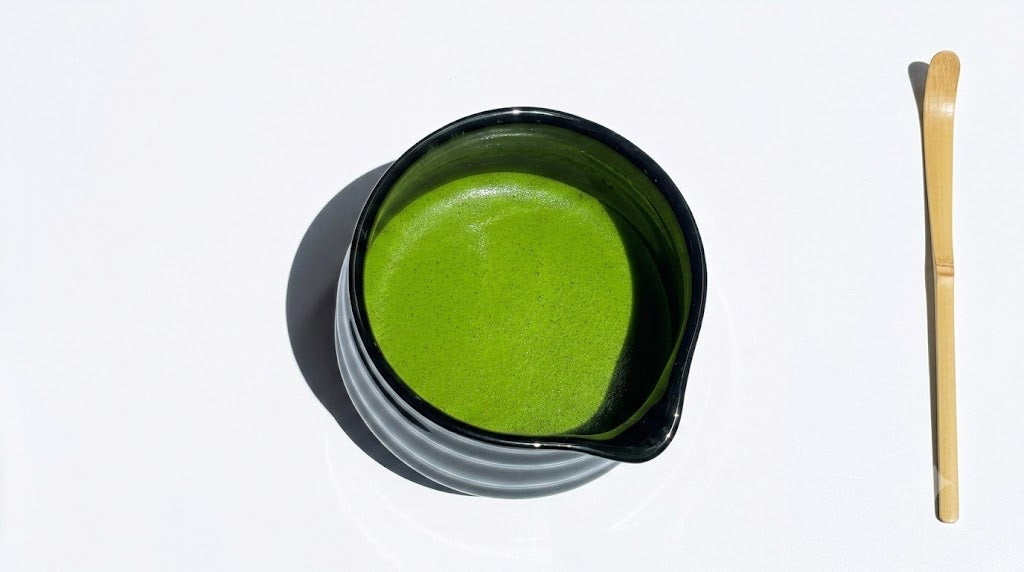
Ceremonial matcha, whisked to a smooth, even foam.
Why the labels aren't regulated
There's no official grading body — in Japan or anywhere else — that defines what "ceremonial" or "culinary" must mean. Any brand can print either word on a bag. That's why the terms alone tell you very little; two products labeled "ceremonial grade" can come from genuinely different quality leaf, and a well-made "culinary grade" from a transparent producer can outperform a poorly sourced "ceremonial grade" from one that isn't.
The more reliable signals are the specifics behind the label: harvest timing (first harvest vs. later), whether the cultivar is named, how finely it's ground, and whether the farm of origin is disclosed.
Where FKRŌ fits
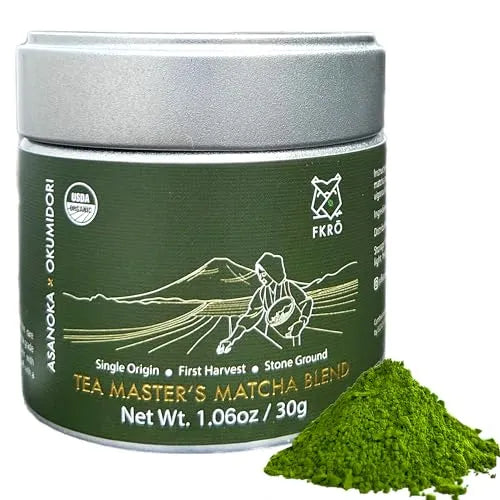
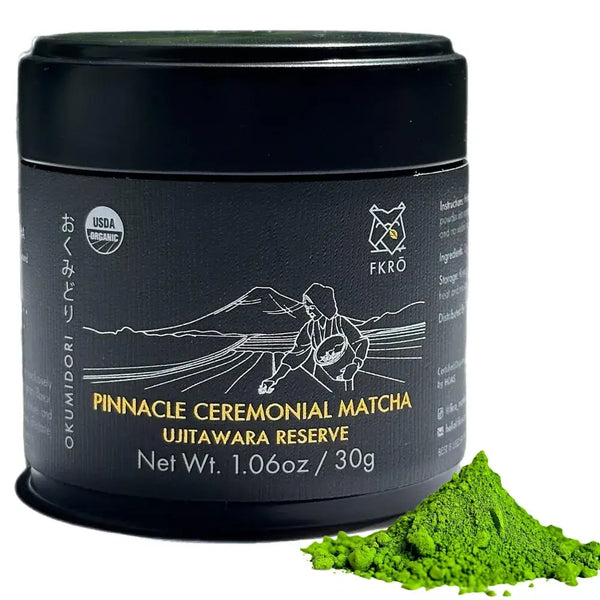
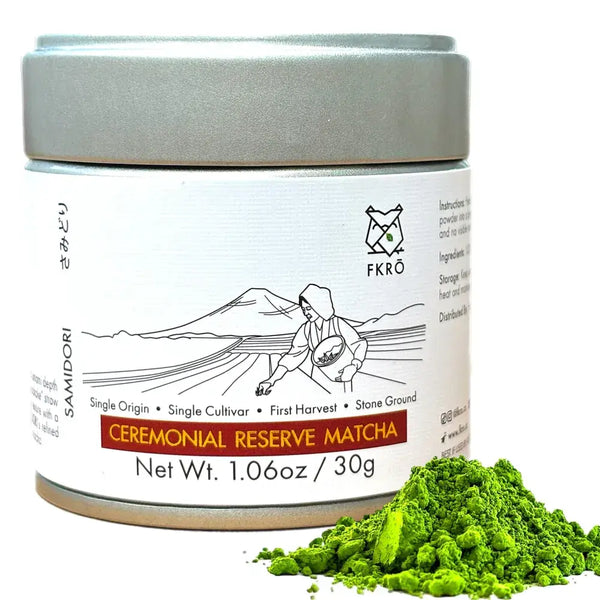
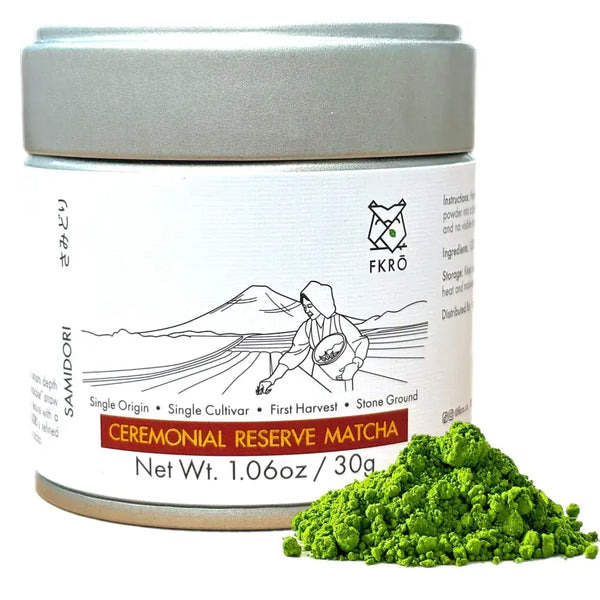
FKRŌ doesn't sell a culinary grade. Every product in the lineup — including the Barista Matcha and Matcha Latte, both formulated specifically for milk — is still made from first-harvest leaves and stone-ground the same way as the single-cultivar ceremonial line. What changes between products isn't grade or harvest timing; it's cultivar. Okumidori, Saemidori, and Samidori are delicate, single-origin cultivars meant to be whisked plain. Yabukita-based blends like the Barista Matcha are chosen for their bolder, more pronounced aroma specifically so they read clearly through milk — without dropping down to a later, harsher harvest to get there.
In other words: the "culinary" job still gets done at FKRŌ, just not by using culinary-grade leaf.

Every FKRŌ product starts from the same first-harvest standard.
Ceremonial vs. culinary, at a glance
Ceremonial vs. culinary, answered
What's the actual difference between ceremonial and culinary matcha?
Ceremonial-grade matcha comes from the first harvest, is shaded longest, and is ground finest — built to be whisked with hot water alone. Culinary-grade matcha typically comes from later harvests, has a bolder and more bitter flavor, and is built to hold up when mixed with milk, sugar, or other ingredients. Neither term is officially regulated, so the specifics behind the label matter more than the label itself.
Is culinary-grade matcha lower quality?
Not necessarily. Culinary grade is built for a different job, not a lesser one — a bolder, more assertive matcha is exactly what's needed to come through in a latte or a baked good. Quality within either grade still depends on the producer: harvest timing, cultivar, and grinding standards vary widely brand to brand.
Does FKRŌ sell culinary-grade matcha?
No. Every FKRŌ product, including the Barista Matcha and Matcha Latte formulated for milk-based drinks, is made from first-harvest leaves and stone-ground the same way as the ceremonial single-cultivar line. What changes between products is cultivar, not grade or harvest timing.
Can I use ceremonial-grade matcha for cooking or baking?
Yes — there's no rule against it, and the result will still taste good. It's just not the most efficient use of it; ceremonial matcha's subtlety is easy to lose once it's mixed with strong flavors like chocolate or vanilla, where a bolder matcha would come through more clearly.
Why are the terms "ceremonial" and "culinary" not regulated?
There's no official governing body, in Japan or elsewhere, that certifies matcha grading terminology. Any brand can label their matcha "ceremonial" or "culinary" at their own discretion, which is why looking at the specifics — harvest timing, named cultivar, farm of origin, grind fineness — is a more reliable way to judge quality than the label alone.
Best matcha for beginners
If you're trying matcha for the first time, start with a ceremonial grade that's forgiving, naturally sweet, and won't punish a slightly imperfect whisk. These two are the most approachable in the FKRŌ lineup.
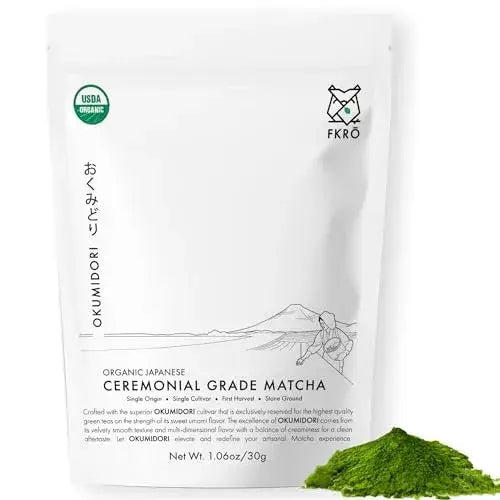
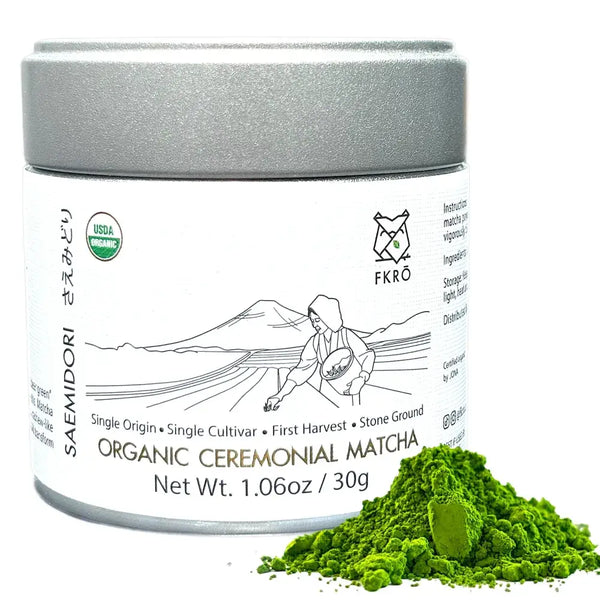
Recommended products
Every product in the FKRŌ lineup is single-cultivar, first-harvest, USDA certified organic, and air-freighted monthly from Japan.