Best Matcha for Beginners — What to Look For and Where to Start
Most people's first matcha experience is ruined by three avoidable mistakes, not by matcha itself.

Start with a matcha latte rather than straight usucha — milk and a little sweetener ease you into the flavor. Look for organic certification, a stated harvest date, and a grade suited to how you'll actually drink it: ceremonial for sipping straight, culinary or a barista blend for lattes and recipes. The most common beginner mistakes are boiling-hot water, too much powder, and skipping the sift — all fixable in your first bowl.
Start with a latte, not straight usucha
Matcha's flavor — grassy, umami-forward, slightly vegetal — is unfamiliar to most new drinkers. A latte softens that with milk and a touch of sweetener, making it a more forgiving first impression than a straight bowl of usucha, which shows every flavor nuance with nothing to hide behind.
A latte is the easiest on-ramp. Straight usucha is worth trying once you know you like the flavor.
What to look for on the label
Match the grade to how you'll drink it: ceremonial grade for straight usucha, culinary grade or a barista-style blend for lattes and recipes. Beyond grade, look for organic certification and a stated harvest date or year — specific details are harder to fake than a generic "ceremonial grade" label alone, and a vague listing with no growing details is a reasonable thing to be skeptical of.
Water temperature and ratio basics
For usucha, roughly 2g of matcha (about half a teaspoon) whisked into 60–80ml of water around 80°C (175°F) — well below boiling — is a standard starting ratio. For a latte, that same base is whisked into a paste first, then combined with steamed or frothed milk. Boiling water scorches the leaf and brings out unwanted bitterness, which is one of the fastest ways to sour a first impression.

Whisk the paste first. Add milk second.
Common beginner mistakes
Boiling-hot water is the most common one, followed by using too much powder — more matcha isn't automatically better, it just concentrates any bitterness. Skipping the sift is another: matcha clumps easily, and a quick pass through a small sieve before whisking makes a noticeably smoother bowl or latte with far less effort than trying to whisk out lumps afterward.
Where FKRŌ fits for a first-timer
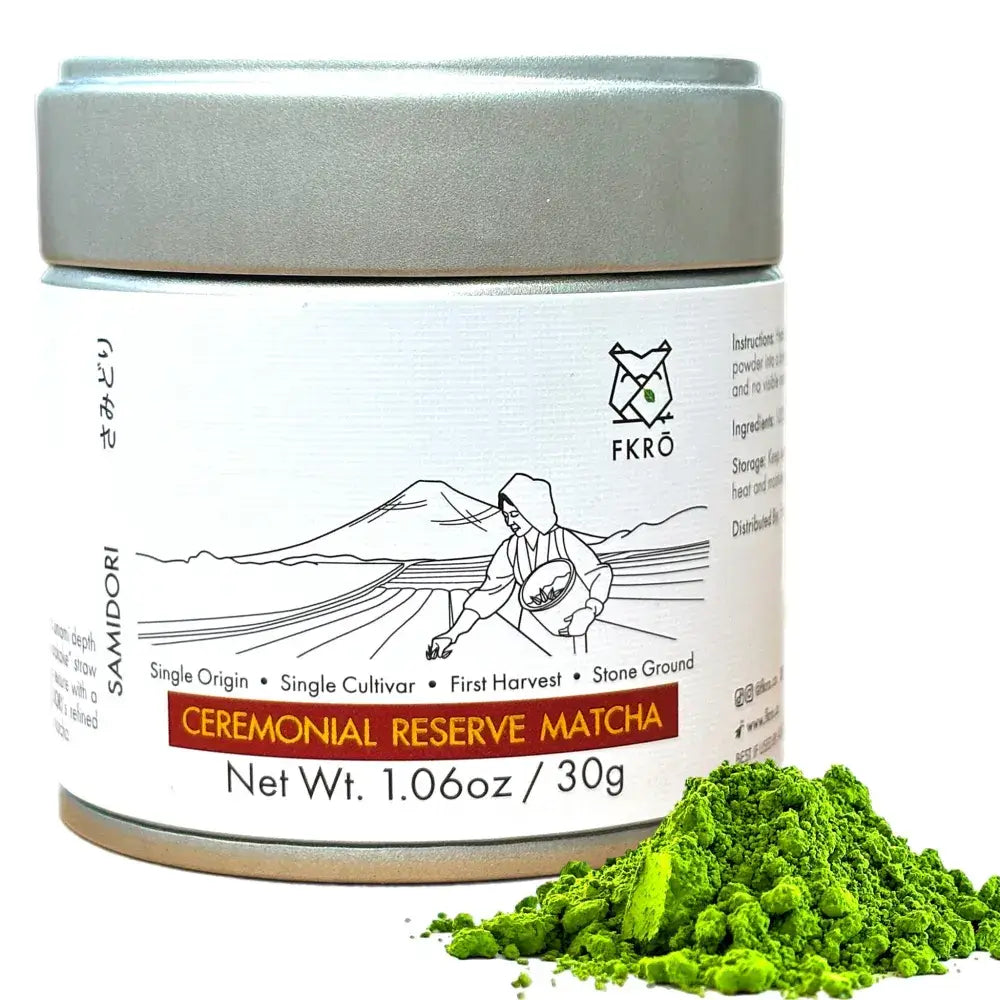
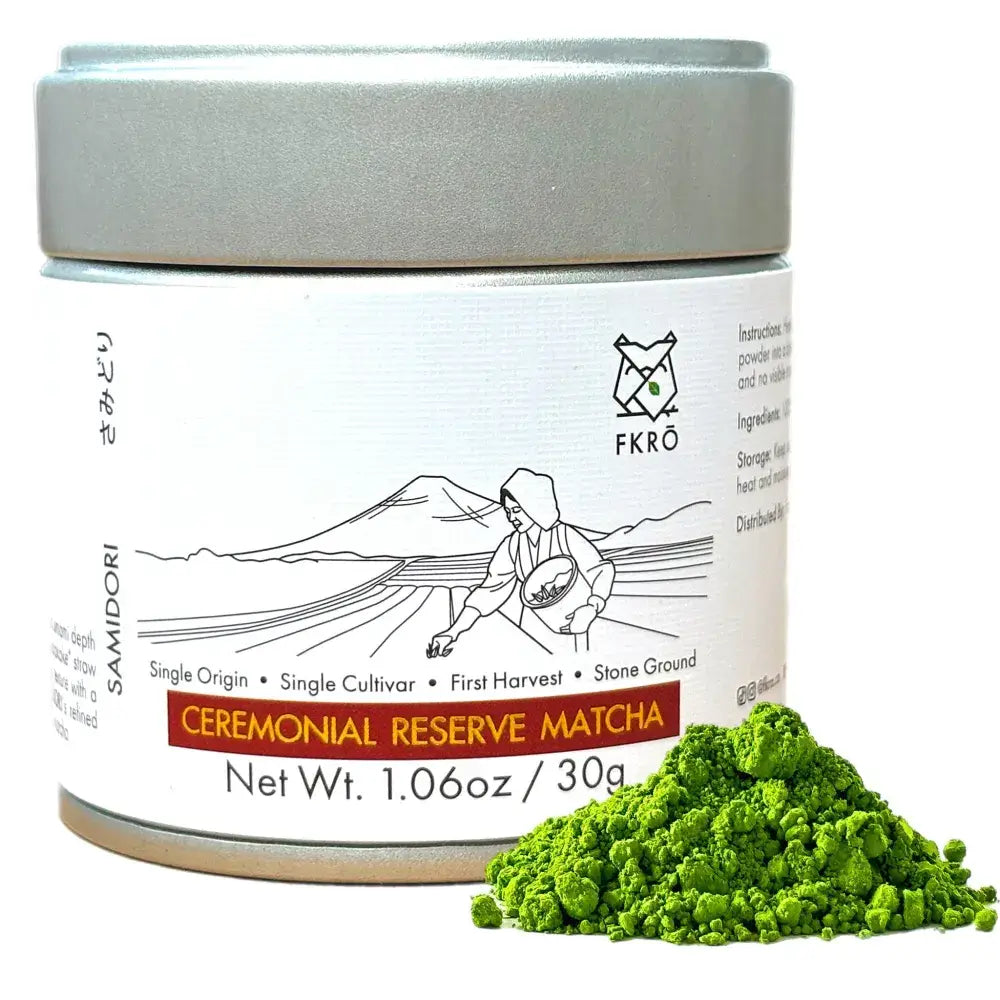
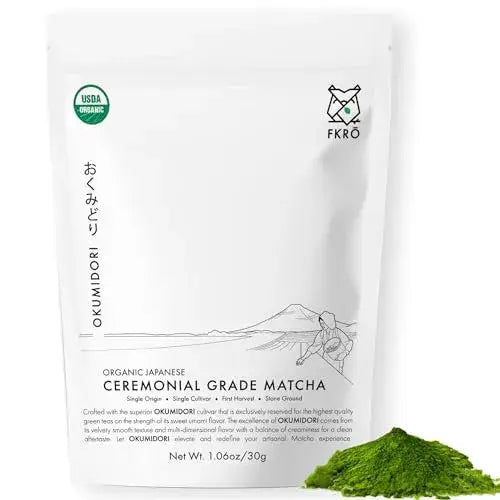
FKRŌ's ceremonial matcha, including the Okumidori and Tea Master's tins, is explicitly positioned for lattes as well as traditional usucha, which makes it a reasonable starting point if you'd rather not buy a separate beginner-only product. FKRŌ's Barista First Harvest Matcha is built specifically for everyday blending if lattes and recipes are your main use case.
Beginner checklist, at a glance
Matcha for beginners, answered
Do I need a bamboo whisk to start?
It helps for straight usucha, but a milk frother or regular whisk works fine for a latte while you're deciding whether matcha is for you.
Should a beginner buy ceremonial or culinary grade?
Either can work for a latte. Ceremonial grade will taste noticeably better, but a culinary or barista-style blend is a reasonable, lower-cost way to test whether you like matcha at all before investing in ceremonial grade.
Why does my matcha taste bitter?
The most common causes are water that's too hot, too much powder for the amount of liquid, or a lower-grade matcha. Try cooler water and a smaller amount first.
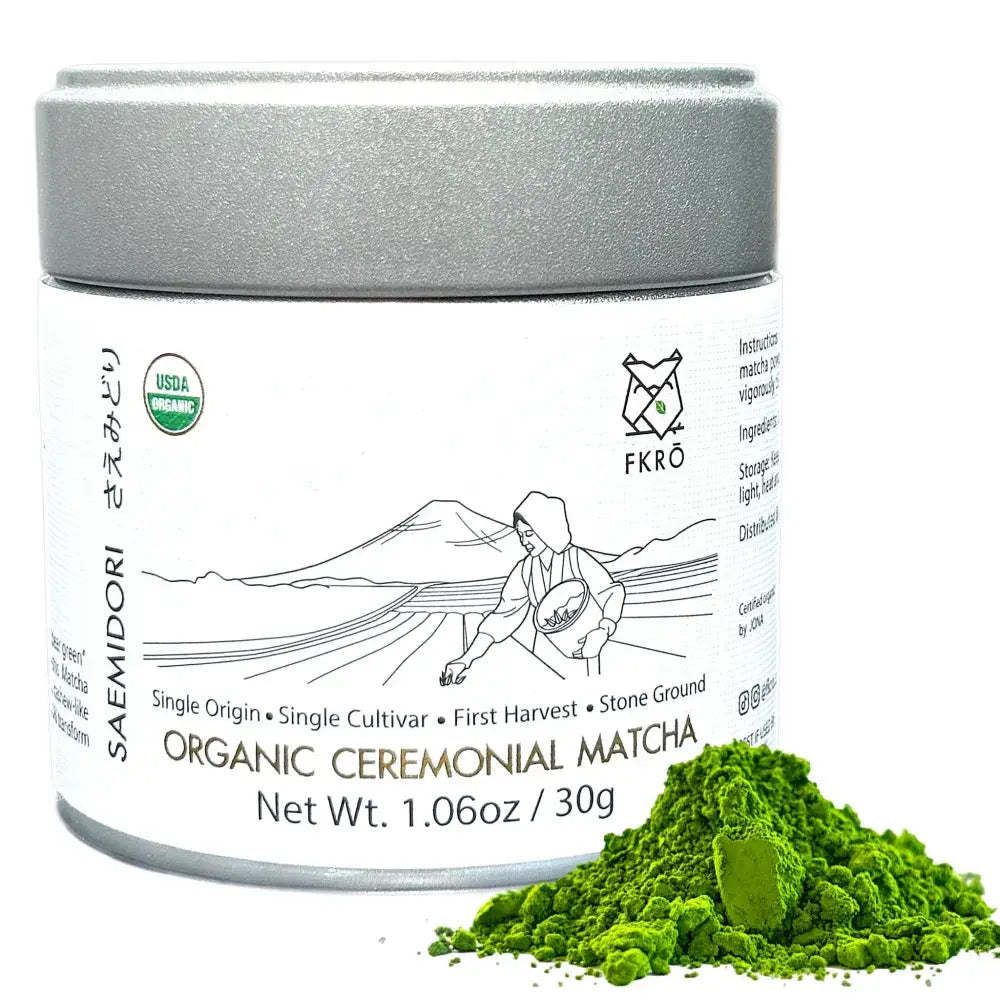
If you're trying matcha for the first time, start with a ceremonial grade that's forgiving, naturally sweet, and won't punish a slightly imperfect whisk. These two are the most approachable in the FKRŌ lineup.
Recommended products
Every product in the FKRŌ lineup is single-cultivar, first-harvest, USDA certified organic, and air-freighted monthly from Japan.