What Is Okumidori Matcha — And Why Is It So Prized?
Okumidori wasn't bred to be a prestige cultivar. It was bred to survive frost. What happened after — once tencha producers put it under shade — is the actual reason it's in your bowl.

Okumidori is a Japanese tea cultivar registered in 1974, bred for frost resistance and a later budding period rather than for flavor. It only became prized for matcha once premium tencha producers discovered how well it performs under shade — holding a deep green color, developing high amino acid content, and staying low in astringency. Today it's one of the cultivars behind some of the most refined, umami-forward matcha available, including several of FKRŌ's own tins.
What is Okumidori?
Okumidori (奥緑) is a Japanese tea cultivar — a specific breed of Camellia sinensis, the same species behind every tea, not a growing region or a grade. It was developed at Japan's national tea research station in Kanaya, Shizuoka, by crossing Yabukita with a native strain known as Shizuoka Zairai No. 16. The name translates roughly to "late green," a reference to its most defining trait: it buds later in spring than almost any other major cultivar.
Okumidori is a cultivar, not a grade or a region. Its name literally describes its late-budding habit.
Why it was bred — and why it took decades to catch on
Breeding began in 1953, and Okumidori was formally registered in 1974 as Tea Cultivar No. 32. The goal had nothing to do with flavor — it was frost resistance. Because Okumidori sprouts roughly 8 to 11 days later than Yabukita, Japan's dominant cultivar, it avoids the early spring frosts that can damage a crop before it's even picked, making it especially useful in mountainous and cold-prone growing regions.
For years, that practical advantage wasn't enough to make it popular. Tea auctions priced on Yabukita's early-harvest timing, so a cultivar that arrived later was treated as lower-priority, and adoption stayed limited through the 1970s and 80s. Cultivated area only began expanding from the 1990s onward, driven initially by the ready-to-drink bottled tea market, which needed high-yield cultivars for large-volume production — a role Okumidori's strong yields suited well.

Bred for frost resistance. Prized for something else entirely.
How it became a prized matcha cultivar
Okumidori was originally developed with sencha in mind. Its reputation for matcha came later, once premium tencha producers in growing regions like Uji and Nishio began shading it. Under shade, Okumidori develops a deep, dark green color, a strong amino acid content, and a mellow flavor with restrained bitterness — exactly the qualities matcha is judged on. That combination is what turned a cultivar bred for practicality into one sought after for quality.
It's now grown widely across Kagoshima, Mie, and Kyoto Prefecture, and ranks among the most-planted tea cultivars in Japan — behind Yabukita, but ahead of many others used specifically for shaded tea.
What it actually tastes and looks like
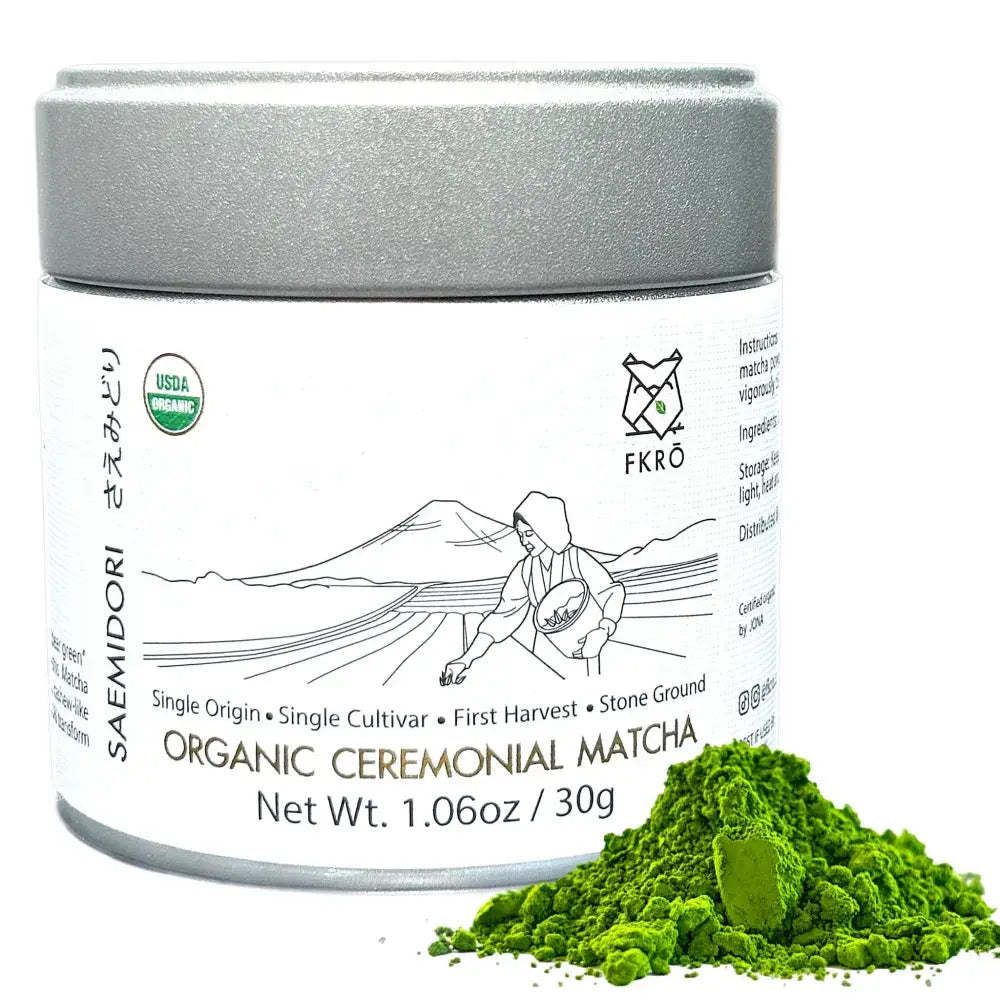
Okumidori is known for a rich, umami-forward sweetness with low astringency and a clean finish — less sharp than some other cultivars, without tipping into blandness. Its color runs deeper and darker than brighter-green cultivars like Saemidori, which is one way experienced drinkers can tell cultivars apart by sight alone.
Okumidori across the FKRŌ lineup
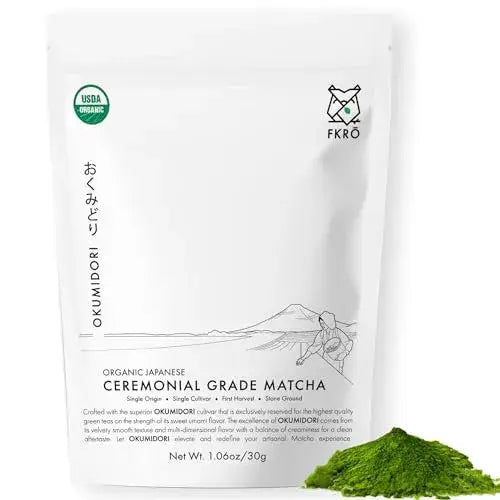
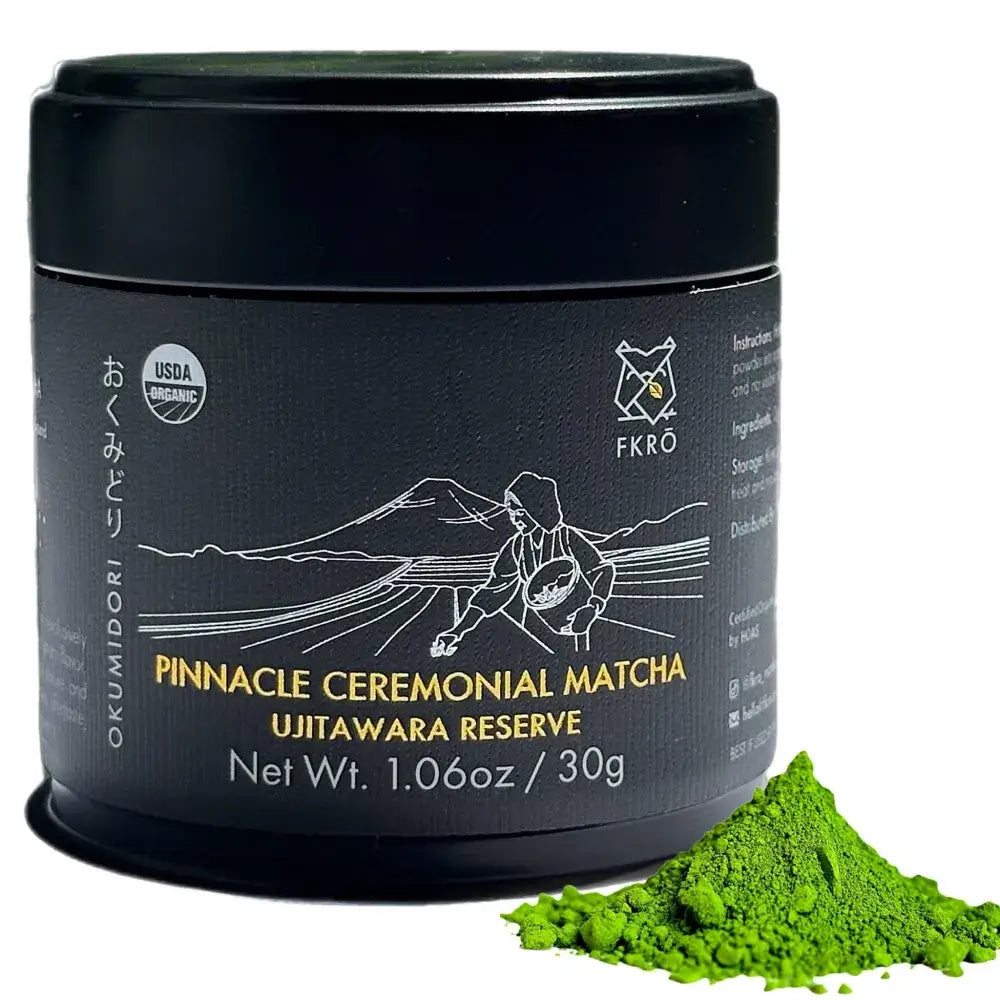
Okumidori is FKRŌ's most-used cultivar, appearing across several tins sourced from different farms. The Organic Okumidori Matcha from the Nishi family farm on Mt. Kirishima, Kagoshima, is described with a bold umami and creamy sweetness, with marshmallow, candy-like tasting notes, suited to usucha, cold brew, and lattes alike. A separate Organic Okumidori Reserve, from the Nakai family farm in Ujitawara, Kyoto, is positioned for the ceremony specifically, with a silky, buttery texture and nutty, chestnut notes. The Organic Pinnacle Okumidori Ceremonial Reserve sits at the top of the range as a limited, first-harvest expression of the cultivar. Okumidori also appears blended with Asanoka in FKRŌ's Tea Master's Matcha, from the same Nishi family farm.
The fact that one cultivar shows up this many times, sourced from different farms and priced across different tiers, reflects how central Okumidori has become to premium matcha generally — not just to FKRŌ's own lineup.

One cultivar, several farms, several tins.
Okumidori, at a glance
Okumidori matcha, answered
Is Okumidori a region or a cultivar?
A cultivar — a specific breed of tea plant, developed and registered in 1974. It's grown in several regions, including Kagoshima, Mie, and Kyoto Prefecture, but the name itself refers to the plant, not any single place.
Was Okumidori originally bred for matcha?
No. It was bred for frost resistance and yield, primarily with sencha in mind. Its reputation for matcha developed later, after tencha producers found it performed exceptionally well under shade.
How is Okumidori different from Saemidori?
Okumidori produces a deeper, darker green color and a rounder, more umami-forward flavor, while Saemidori tends toward a brighter green and a more delicate sweetness. Both are prized matcha cultivars, but they express differently in the bowl.
Why does FKRŌ use Okumidori in more than one product?
Okumidori is sourced from more than one FKRŌ family farm — including the Nishi family farm in Kagoshima and the Nakai family farm in Ujitawara, Kyoto — and each expresses the cultivar differently depending on terroir and processing, which is why it shows up across several distinct tins.
If you want to taste Okumidori for yourself, FKRŌ carries it at two different tiers — the everyday tin and the limited first-harvest reserve.
Recommended products
Okumidori also shows up blended in FKRŌ's Tea Master's line, alongside other single-cultivar options and the tools to keep your matcha fresh.