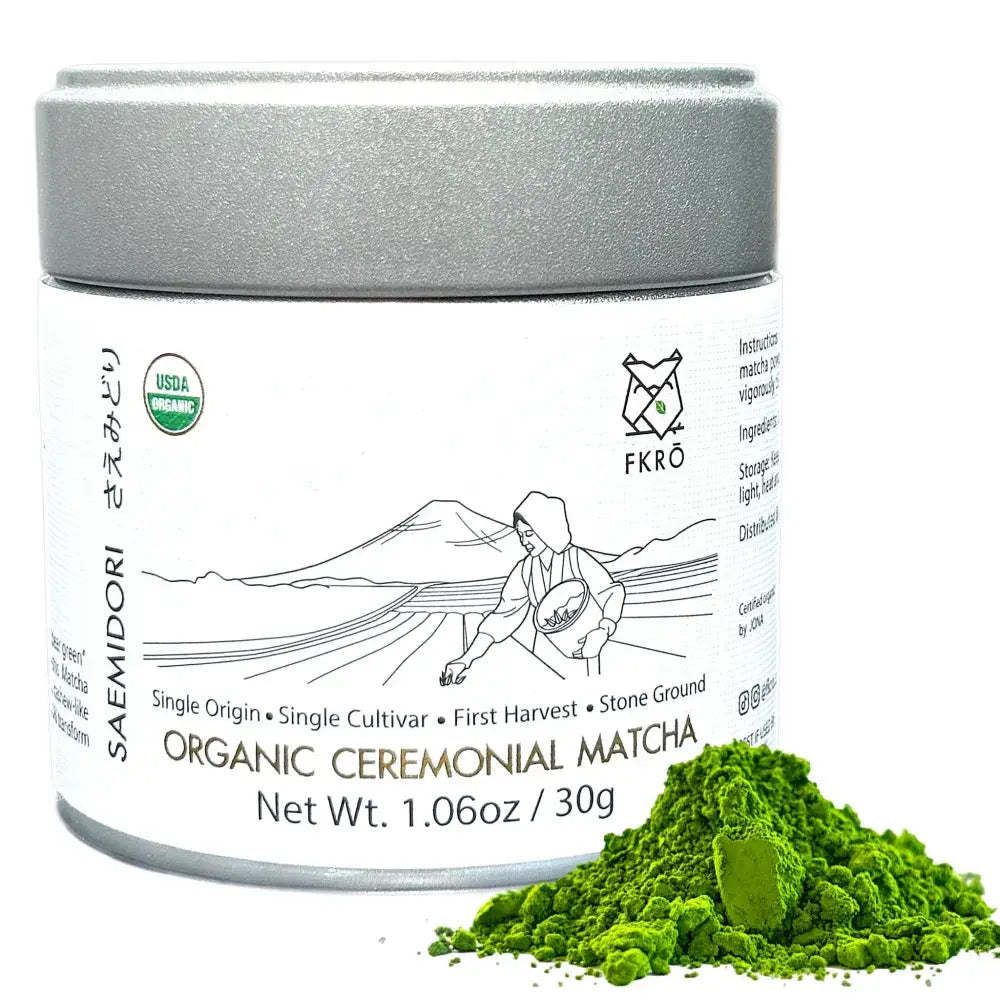
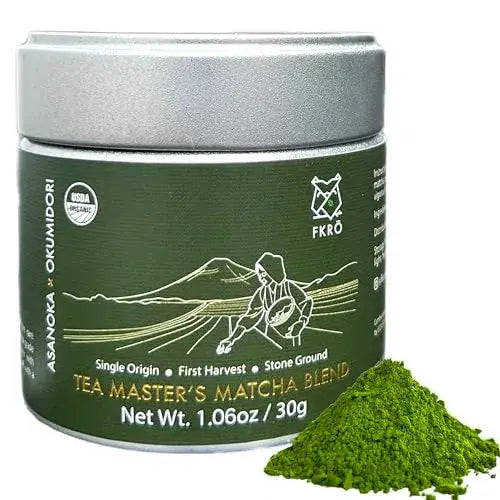
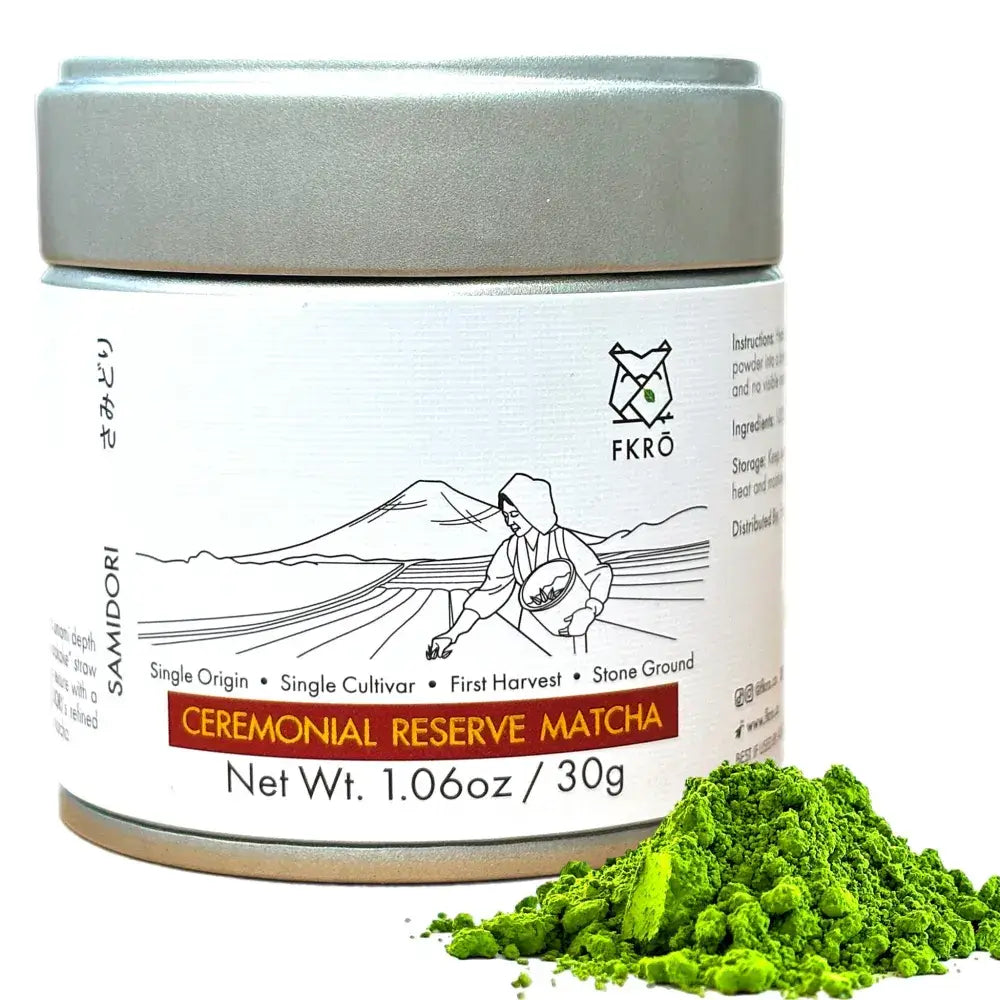
What Is Ceremonial Grade Matcha?
"Ceremonial grade" isn't a marketing label — it describes a specific set of choices made at harvest, in the shade-growing period, and at the grindstone, each one measurable and each one visible in the cup.
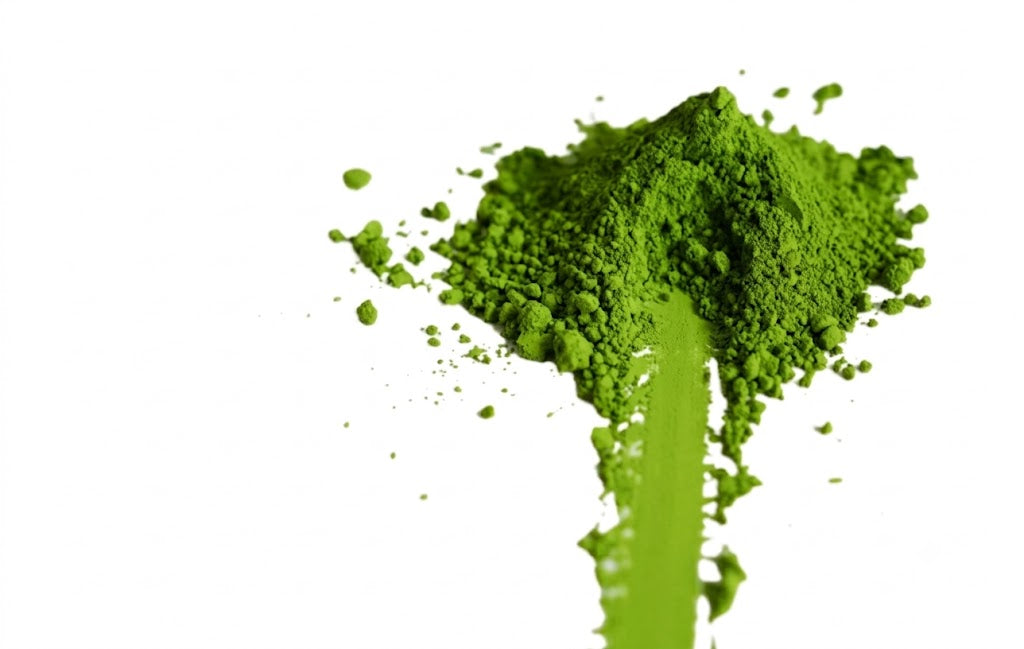
Ceremonial grade matcha is made from the youngest, most tender leaves — picked from the top third of the plant during the first harvest of the year — shade-grown for a minimum of three weeks, and stone-ground into an ultra-fine powder at roughly 30g per hour. The result is a vibrant jade-green color, a silky texture, minimal astringency, and a naturally sweet, umami-forward flavor meant to be enjoyed on its own.
What "ceremonial grade" actually means
Ceremonial grade is the highest classification of matcha, reserved for only the youngest, greenest leaves — those from the top third of the tea plant, packed with the most nutrients and the most concentrated umami. It's meant to be whisked with water and consumed on its own, which is why the flavor, texture, and color all have to hold up without milk, sugar, or other ingredients to soften them.
Ceremonial grade is defined by which leaves are picked and how they're grown and ground — not by a brand's own labeling. Every step below either qualifies for the label or it doesn't.
How it's grown and harvested
Ceremonial grade starts with the first harvest of the year — the flush that produces the most nutrient-dense leaves. Before picking, the plants are shade-grown for a minimum of three weeks, which boosts amino acids like L-theanine and increases chlorophyll, giving the leaves their vivid green color and natural sweetness. FKRŌ's leaves are hand-picked, taking only the youngest growth from the top third of the plant.
All of this is grown without pesticides, and every FKRŌ ceremonial-grade product is USDA certified organic.
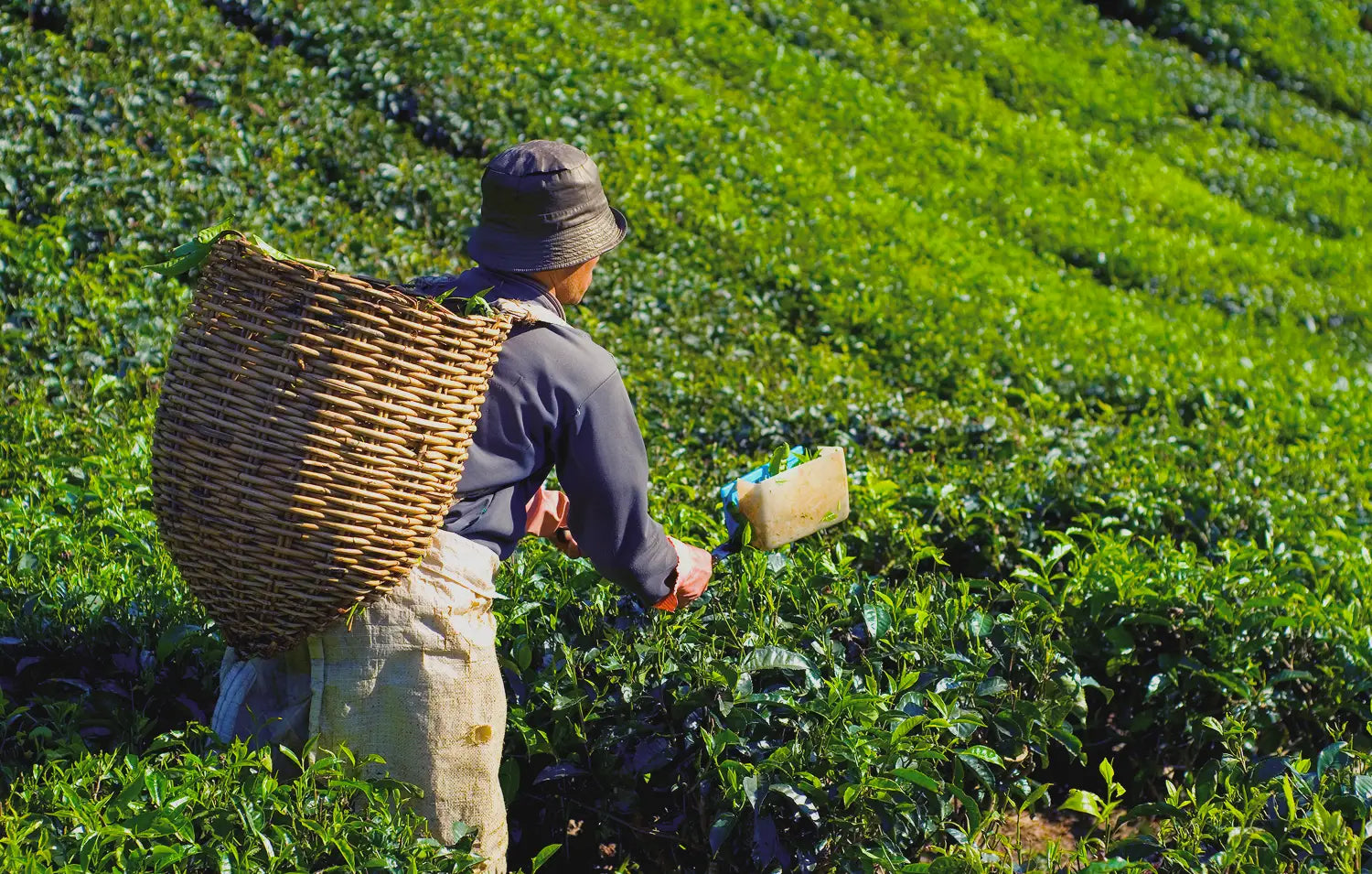
Hand-picked, first harvest — the two conditions that start every ceremonial-grade leaf.
How it's ground
After harvest, the leaves are stone-ground to an ultra-fine 10–15 microns. FKRŌ mills at roughly 30g per hour — while many mass-market operations grind at around 2kg per hour. The slower pace keeps the stone from generating heat, which would otherwise dull the color, flatten the aroma, and coarsen the texture. It's the difference between a powder that dissolves into a silky, uniform bowl and one that leaves grit behind.
Once ground, the matcha is stone-ground in Japan and air-freighted to FKRŌ's warehouse monthly, rather than sitting in storage for months before it ships out to customers.
Where FKRŌ sources its ceremonial matcha
FKRŌ's ceremonial matcha comes from a small network of named family farms rather than a single anonymous supplier. The Nishi family farm, on the slopes of Mt. Kirishima in Kagoshima, produces FKRŌ's Okumidori and Tea Master's matcha. Reserve-tier matcha comes from specific single farms as well — including a family farm in Ujitawara, Kyoto, and the Higashi-Sonogi valleys of Nagasaki, where one limited-batch matcha is shaded under traditional warakake straw rather than synthetic netting.
Most of FKRŌ's ceremonial matcha is single-cultivar, made from one named tea cultivar rather than a blend — Tea Master's Matcha is the exception, crafted from a blend of the Asanoka and Okumidori cultivars.

Named farms, not anonymous supply chains.
Ceremonial vs FKRŌ's Barista Blend
Ceremonial grade is traditionally meant to be whisked and consumed on its own. FKRŌ's ceremonial-grade matcha is versatile enough that its own product listings recommend it for traditional usucha, lattes, and smoothies alike — it isn't limited to one preparation. For everyday blending specifically, FKRŌ also offers a separate Barista Blend, harvested in micro-batches and positioned for lattes, desserts, and pastries where the matcha is one ingredient among several.
Ceremonial grade, at a glance
Ceremonial grade matcha, answered
Is "ceremonial grade" a regulated term?
No. There's no legal or government standard that defines "ceremonial grade" — it's an industry convention based on leaf selection, growing method, and grinding, rather than a regulated label. This makes sourcing transparency important, since the term alone doesn't guarantee quality.
Can ceremonial grade matcha be used in lattes?
Yes. While ceremonial grade is traditionally meant to be whisked and consumed on its own, FKRŌ's ceremonial matcha is versatile enough for traditional usucha, lattes, and smoothies alike.
Is all FKRŌ ceremonial matcha single-cultivar?
Most of it is, made from a single named cultivar rather than a blend. Tea Master's Matcha is the exception — it's crafted from a blend of the Asanoka and Okumidori cultivars.
Why does grinding speed matter?
Stone grinding at a slow pace — around 30g per hour, compared to roughly 2kg per hour for mass-market grinding — keeps the stone from heating up. Heat during grinding dulls color, flattens aroma, and coarsens texture, so the slower pace directly protects the qualities ceremonial grade is judged on.
How is ceremonial grade different from FKRŌ's Barista Blend?
Both are first-harvest, but Barista Blend is harvested in micro-batches and positioned specifically for everyday blending — lattes, desserts, and pastries — rather than for drinking on its own.
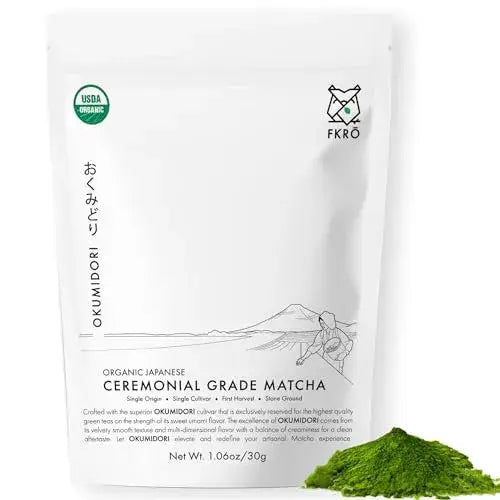
Organic Okumidori Matcha (Kagoshima) 30g
Bold umami and creamy sweetness, versatile enough for a first bowl, cold brew, or a latte. FKRŌ's most accessible ceremonial-grade tin.
$26.90
View Product